What We Do
We work primarily with individually captured and tagged birds: from the end of 2015 to the present, we have sampled more than 10,000 individuals from 54 different species. The BEL actively collaborates with a network of laboratories, universities, and scientific institutions to generate cutting-edge knowledge and train highly skilled personnel. Our work extends both to the Eastern Pacific flyway—which includes Chilean territory—and to other migratory routes globally. Our research focuses on understanding bird responses to natural and anthropogenic challenges. Our main lines of work include:
Ecophysiology and Migration
We investigate the physiological and behavioral adaptations of birds during the preparation and execution of their migrations, with a special emphasis on shorebirds and their flight strategies within the Eastern Pacific.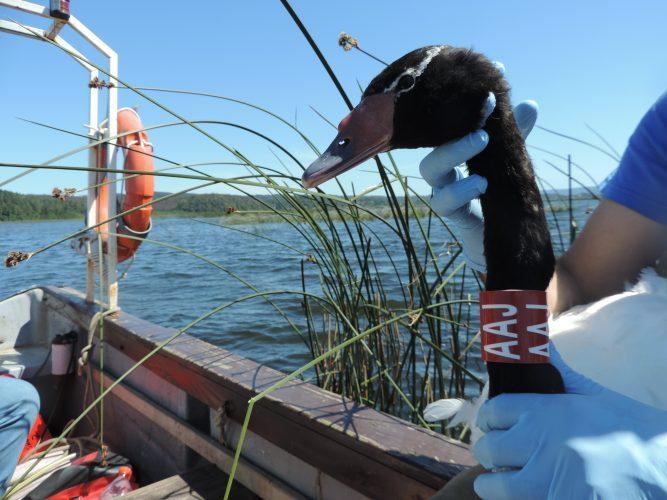
Connectivity and citizen science. Río Cruces Wetlands Cente
Using the Black-necked Swan (BCS) as a model, this project aims to determine the current population status of this flagship species by capturing and tagging individuals with remote-reading collars, and some with GPS/GSM devices, in the Cruces River Wetland (CRW), and implementing a long-term monitoring program for tagged birds. In parallel, the project seeks to encourage the participation of local communities, including those engaged in economic activities within the CRW. The results will inform the development of appropriate management plans for the protected areas included in the project, particularly the CRW. Furthermore, the project's impact will extend beyond its initial implementation period thanks to the individually tagged BCS. By the end of 2018, samples had been collected from 60 birds.
Seasonal dynamics of the non-breeding period in migratory birds
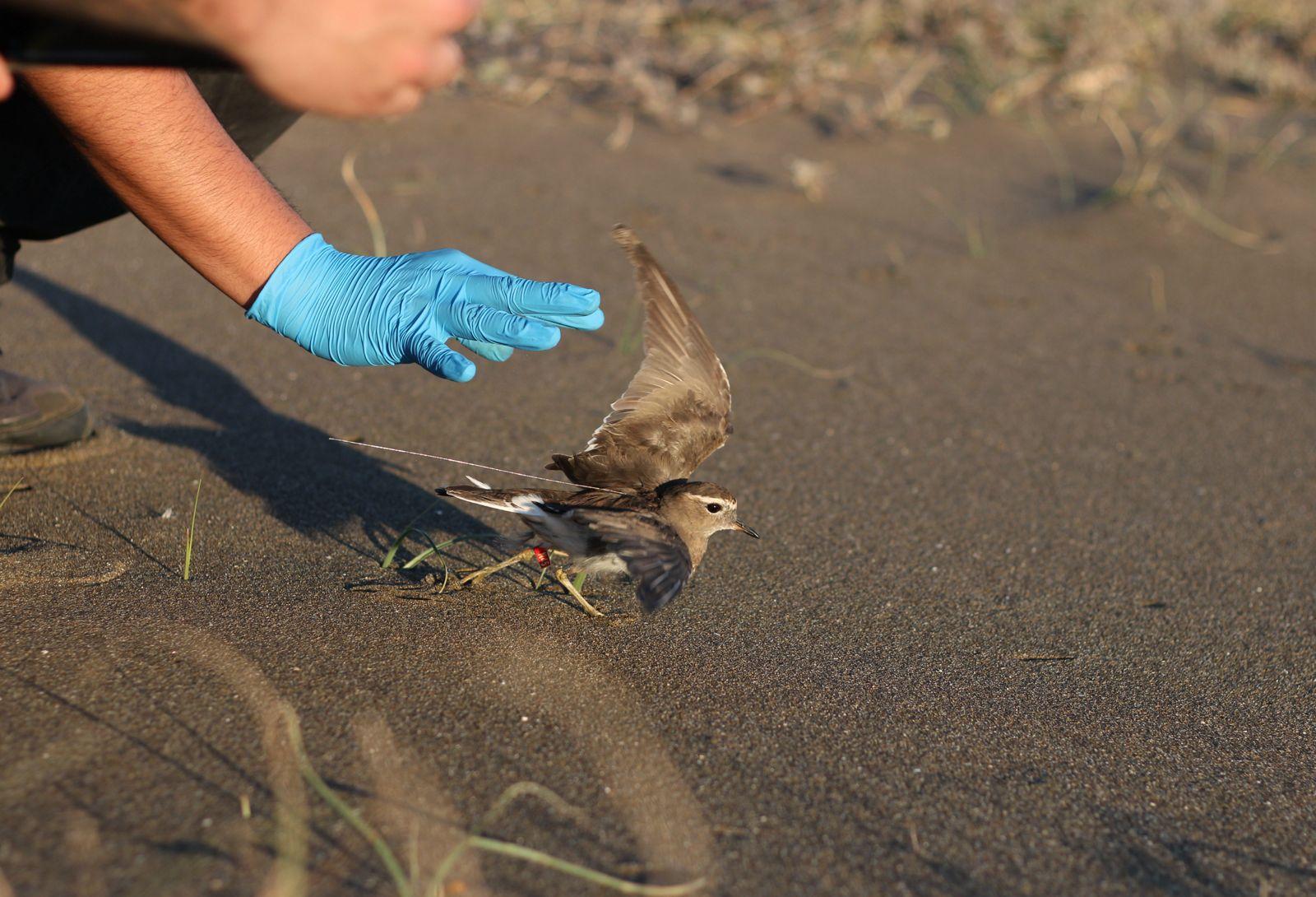
Chile's unique geography and nutrient-rich habitats create a haven where countless migratory birds settle during their non-breeding season. This prolonged residency (~six months) transforms the country into an exceptional natural laboratory for observing species that are otherwise constantly on the move. This provides unique opportunities for the study of temporal physiological dynamics in wild birds. During the austral summer, we study Nearctic birds that overwinter throughout Chile. Conversely, during the austral winter, the central region receives birds escaping the extreme cold of the deep south. Example of the work performed: ◉ Valdebenito, J.O., et al. (2025). Constitutive immune function variation across the non-breeding season in an extreme long-distance migrant. Journal of Avian Biology, 2025, e03435. https://doi.org/10.1002/jav.03435 ◉ Gutiérrez, J.S., et al. (2019). Oxidative status and metabolic profile in a long-lived bird preparing for extreme endurance migration. Sci Rep 9, 17616. https://doi.org/10.1038/s41598-019-54057-6
Motus on the Move
CANADA FOUNDATION FOR INNOVATION (2023-2027). Motus on the Move: Transforming a Terrestrial Tracking Network for Movement Ecology Research and Wildlife Conservation. We collaborate with Motus, an international research community working together to study the movement and behaviour of birds, bats, and insects. These animals carry miniaturized tags that transmit information to stations placed across the landscape. This powerful conservation tool transforms how we understand and protect biodiversity.
Evolutionary Ecology and Health
We study sexual selection, dimorphisms, and parasitic ecology using molecular tools and body condition.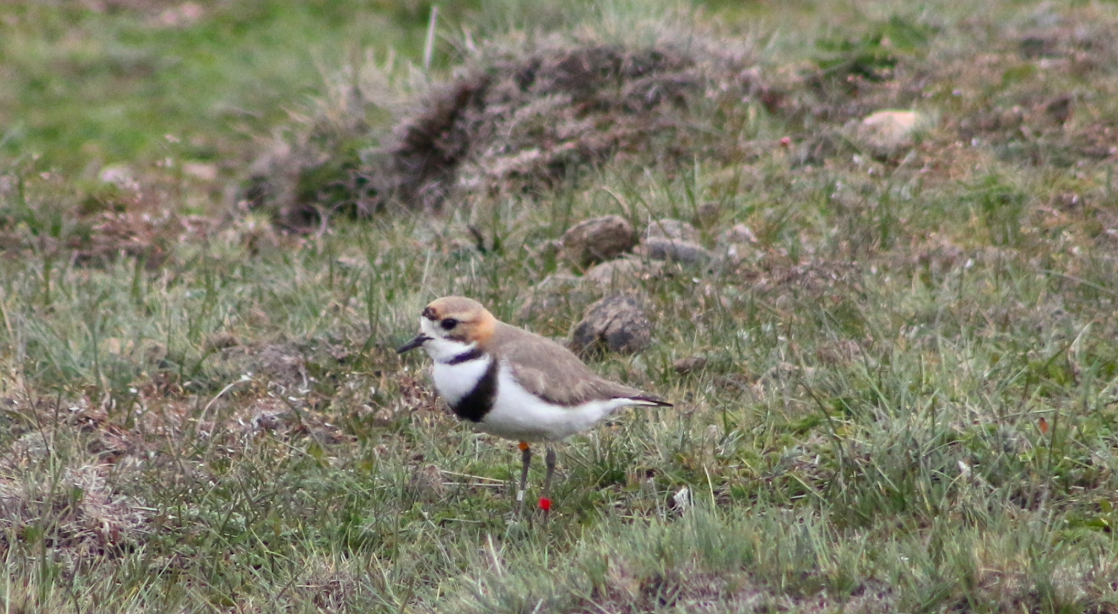
Fitness costs of sex-specific investment in attraction in a small shorebird
This project aims to use the Two-banded Plover (Charadrius falklandicus) as a model organism to investigate the relationship between investment in attraction between the sexes and their immune response. This project is a collaboration with the Río Cruces Wetlands Center (CEHUM) and the Bird Ecology Lab, Austral University of Chile.
Conservation Biology and Anthropogenic
We evaluate the impact of human activities (aquaculture, tourism) on birds for better territorial planning.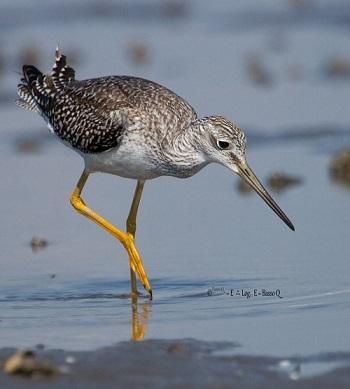
Example Conservation
In this project, co-directed with Dr. Guillermo Fernández, ICMYL, UNAM, the question was raised regarding the importance of using shrimp ponds, once harvested, as alternative food sources for shorebirds. To this end, the project was divided into two phases. During the first phase (2014-2016), the importance of shrimp farms as feeding sites for wintering shorebird species in the municipality of Angostura, in the northern part of Bahía Santa María, Sinaloa, was determined. In Angostura, more than 40 shrimp farms with 3,100 hectares of shrimp aquaculture ponds were reported. More than eight shrimp farms (over 900 hectares) were involved in conducting shorebird censuses and tracking the availability of shrimp ponds during the 2014-2015 and 2015-2016 shrimp harvest seasons. In a second phase (2016-2018), the analyses of which are being finalized, an assessment of body condition and metabolite profiles was conducted in shorebirds using shrimp farms. Additionally, food and blood samples were taken from shorebirds, both in natural habitats and at shrimp farms, to determine, through isotopic signaling, the relative composition of the diet of birds using both habitats.
Long-Term Monitoring
We maintain capture and banding programs to generate robust databases that allow us to understand the population dynamics and natural history of resident and migratory birds in Chile.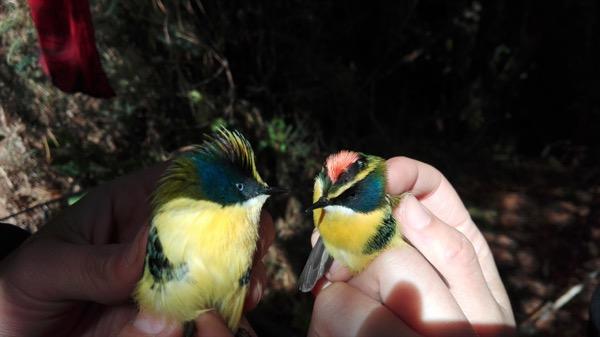
Marsh bird communities associated with urban wetlands in Valdivia
The structure and composition of marsh bird communities associated with urban wetlands located in growth areas of the city of Valdivia are virtually unknown. The objective is to obtain baseline information to assess potential structural and/or functional changes in these wetlands.